
One of the things that has been an inconvenience at the Beta Site is the lack of cell signal for my gamecams. I have several cams out there but only one can actually check in with any regularity and even then its spotty. The ideal solution would be cameras that sent signal over the internet, thus negating the need for cell towers and signal. However, that opens up its own can of logistical worms. This weekend is an experiment in wrangling those worms.
First thing we do is pick up a “Ring”-style camera. In this case a Eufy E30, which I temporarily mounted to the corner of the conex.
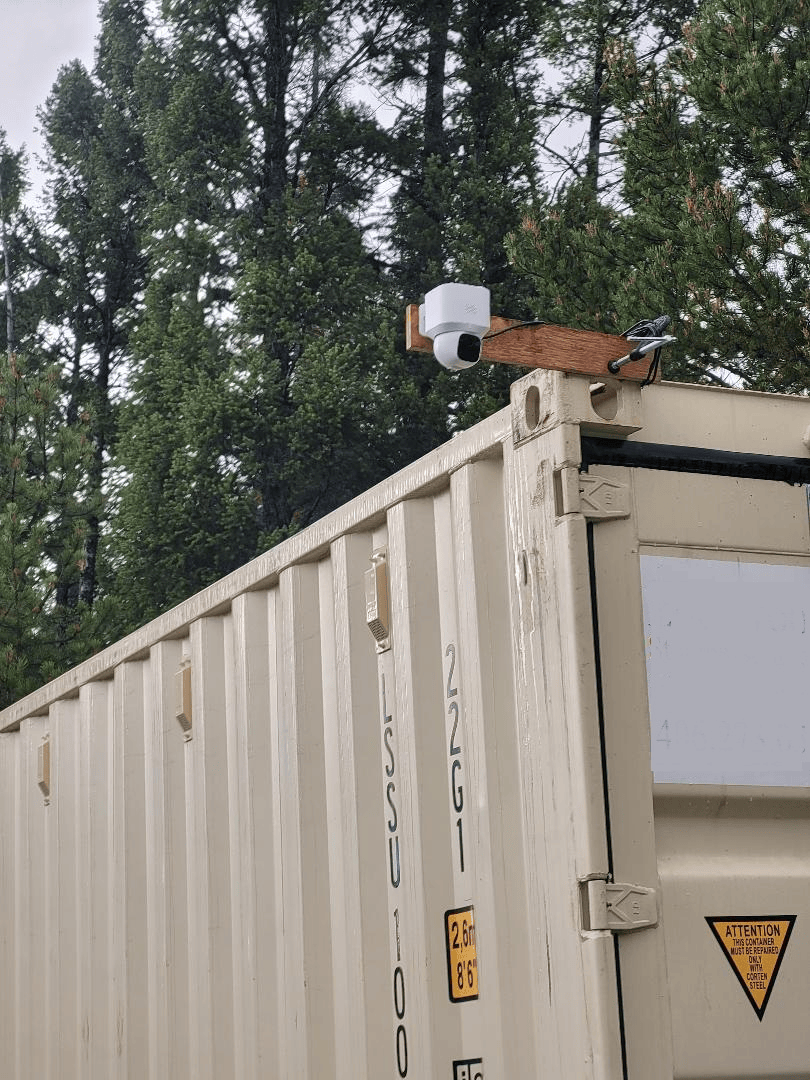 This camera comes with a small solar panel to keep it charged. Like most gear like this these days, the panel and charging port are USB. I had a larger Goal Zero Nomad 20-watt panel laying around and since it was significantly larger than the small panel the camera came with, I decided to use that to keep the camera topped off. I affixed some weight to the panel so it wouldnt get blown off the top of the container and set it up.
So, the camera part of the equation is done. Now for the internet part. A few trips back I experimented with the Jackery powering my StarLink setup. Under full sun the numbers were promising. It appeared that one hour of recharging under full sun gave about ten hours of internet time. I set up the panels flat on the deck, secured them so they wouldn’t blow away, and plugged them into the Jackery. This required the Jackery to sit outside which is not a great idea for electronics given that things like rain exist. After some thought, I decided that I would put the Jackery on the deck, run the wires from/to the Jackery down and through the spaces between the deck slats, and flip a plastic tub over the whole mess to keep it dry. Ventilation would come from below but rain would not.
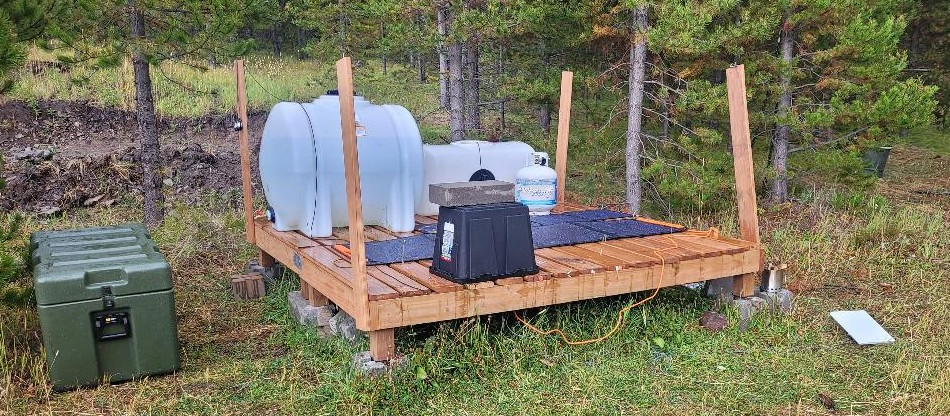
The Starlink is, by its design, waterproof and not needing of any particular protection. However, I will wind up putting a semi-permanent pole mounting for it. So…camera has power, Jackery is getting power from panels, Starlink is up and running. Lets check the phone app:
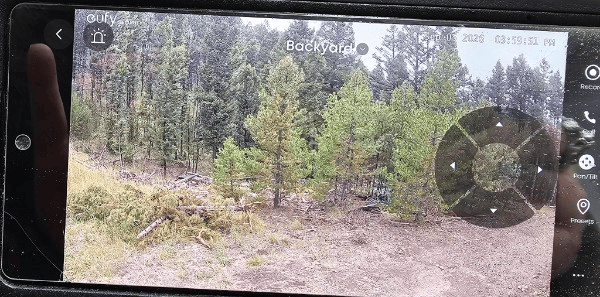 And the real kicker…the camera has a pan-tilt-zoom feature so I can move the camera around remotely to look from different angles.
Now this isn’t 100% as cool as it seems. The camera is running full-time, meaning it is constantly sending live signal upstream to the internet, even if no one is watching it. That uses power. However, I can remotely turn the camera on and off so the camera only streams images when Im actually looking at it. Thats great. But it means the camera and its motion detecting is off if something walks by it. The obvious solution to this is to provide more power and a more capacious battery for the camera itself. This isnt necessarily a problem. It would be a simple matter of creating a battery/panel charging combo similar to whats running Starlink at the moment.
The weather this weekend is rainy and overcast, so I’m curious to see how battery recharging is going to go. In theory, Starlink can run off the Jackery for about four or five days before it runs out of juice. Even with overcast weather there is still a measure of recharging that occurs, so it might be feasible to say that as long as there isnt a continuous five days of no sun, the battery will power things ‘indefinitely’. Gonna find out.
For now, I think its cool as heck to be sitting at work, pick up my phone, activate the camera, rotate it 360-degrees and see whats going on up there. We’ll see if this works out long term or not, but for right now its very cool.
Jackery in conex solar panels on roof of conex and starlink in center of roof to make it a little bit less obvious. That or thin plastic shell that disguises it. What you have right mow is only moderately ok for animals. For people its free stuff sitting out. Any curious bear or such can knock stuff down or around just because. Not super likely if there isnt the scent of food or trash near it but.. its just sitting there
I don’t think this will be a long term solution. I don’t think those panels will work when it starts snowing. At least mount them at an angle and elevate them so the snow doesn’t pile up on them.
Everyone wants cameras everywhere. Maybe if Flock had made it’s cameras available to everyone online for free, no one would want them removed now.
Flock cameras are available to everyone for free…just not online. I have a dozen or so in the storm ditch down the road.
This is the way
What you’ve put together is exactly what I was proposing when I described some small internet home security cams that I use in my home and at my mother-in-law’s place about 35 miles away. It is indeed neat to be able to access those cameras either in “live” mode or to access motion-triggered clips stored on micro-SD cards in the cams themselves. Nice start!