Food storage…literally

Ok, here’s the scenario to imagine: its the dead of winter and, for whatever reason, you’ve been forced to head to your fallback location. Really, all you could take with you was whats on your back and not much else. Being the harshest part of winter, its a bit of a slog but you make it to your destination. You let yourself into your cabin (or whatever) and you’re wet, cold, and hungry after the stress-filled challenge of getting there. You grab a propane bottle off the shelf and get your buddy heater going so you can sit in front of it and get some immediate warmth while you wait for the fire in the woodstove to start warming the place up. You drag a plastic bin out from under the bunk and change your wet pants and socks for dry. So far so good. But..still hungry. This little haven has been empty for the last three months, so there’s been no heat. Whatever food you have in place is going to have to be something that can withstand freeze/thaw cycles without becoming inedible or simply exploding its packaging. So with that in mind, here’s my question for the collective hive-mind: If you were going to store foods in a location that was going to be subject to freeze/thaw cycles, what foods would be best choices? Obviously anything that is liquid is probably not gonna fly since jars will freeze and burst. Also, some foods simply do not handle being repeatedly frozen and thawed. To my way of thinking this means that youre restricted to things that are dry and have no liquid or semi-liquids to worry about….soup mixes, instant potatoes, freeze dried foods, rice, beans, etc, etc. Canned goods are probably off the list since they run the risk of the cans bursting from the cold, and the wet contents may not remain palatable through the freeze/thaw cycles.

No doubt someone will opine that the end-run around this is to have some sort of heat system in place that will run while the cabin’s owner is absent. A large propane tank and a thermostat, or some such setup. Thats not in the cards…while mechanically it is do-able, thats kind of putting a lot of eggs into a basket that may, at the worst time, simply fail.

And, also, keep in mind I am not asking about the quantity of food. Thats not really relevant here, Im asking what actual foods would be indifferent to storage in an environment where there is nothing standing between them and freezing.

Thus far, I’ve come up with dried pasta, rice, beans, hash browns, drink mixes (iced tea, Gatorade, Tang, etc.), egg mix, pancake mix, salt, sugar, most spices, hard candy, oatmeal, cornmeal,canned bread,  mac-n-cheese, and a few others. MRE’s and freeze drieds are certainly an option and are part of the overall answer, but what else?

Age come on apace

Liberace, back in the day, sued a tabloid for implying that he was gay. (And, of course, he was but back then it was a secret. A poorly kept one..I mean, look at the man…but a secret nonetheless.) So Liberace sued and won a judgment against the tabloid. When asked if the stress and spotlight of the scandalous trial was upsetting to him, Liberace famously said “I cried all the way to the bank.”

Fast forward to the other day when I was hitting the bargain meat bin at Albertsons…which I do every day on my lunch hour since they are nearby. So I found a half dozen pork tenderloins marked down 50%. Ok, protein is protein..lets head to the check out. The guy working the till asks me how old I am. I ask him why he needs to know. Turns out, the first Thursday of every month is ‘Senior Citizen Day’ with a 5% discount. Apparently their threshold for senior citizen is a rather low bar and I qualified. So, on one h and, I’m pretty jazzed about getting 55% off on bargain meat, but on the other hand I’m pretty annoyed that I look old enough that someone would ask me if I’m a senior citizen.

I cried all the way to the deep freeze.

When you don’t miss the .gov during a shurtdown

Its been, what?, a month of government shutdown and…I haven’t even noticed. But, according to the news that may change when the barbarous hordes that rely on government aid to eat discover that the free money isn’t flowing into their EBT card as usual.

The internet, a bastion of truth and fact, has all sorts of warnings that people buying groceries will be attacked by the EBT crowd for their groceries. And that there will be mass shoplifting. And looting. And….well, you fill in the rest.

Will this sort of thing happen? Probably in some cases as people get fueled by these same articles. But by and large I don’t think so. If youre too lazy to work for food youre probably too lazy to steal it. But, I’ve been wrong before.

What amuses me terribly is that there are organizations and food banks that are rushing to cater (literally) to the poor souls of federal employees who may be going hungry as this nasty and evil ‘shutdown’ goes on. The depth of my absolute indifference for the plight of federal employees simply cannot be measured. How can you work at a government job, with government benefits, at government wages, and government schedules, and somehow not be able to put away enough money in the bank to buy yourself groceries for a month? How does that happen?

If you’re folding shirts for $12 and hour for twenty hours a week at Cabelas….yeah, youre living on a tight budget if you have a budget at all. But working as a GS whatever for Uncle Sam seems to give enough that you should be able to tuck a couple grand into a mason jar in the backyard for emergencies.

But…you know what? I don’t care. It’s not a nice thing to say out loud, but I have virtually no concern for anyone on “food stamps”. I absolutely recognize that there are plenty of people who genuinely are unable to feed themselves for very legitimate reasons. And it’s a shame that those people have to share the moral outrage that is directed at the able-bodied and ambition-challenged parasites that most people think of when food stamps are mentioned.

Do you know what happens if someone I care about winds up in a situation where they can’t afford to feed themselves and they need to run to .gov? I feed them. And I help them get back on their feet. And I look out for them as they get their act back together. It is not a financial hardship for me to feed someone I care about. I’ve been hungry before and as a result I’m always sensitive about food. In fact, I generally refuse to eat in front of other people unless theyre eating as well because I can’t shake the feeling that if I’m eating and the other person isnt, then somethings wrong and I need to get them some food.

But for now, this ‘government shutdown’ only affects me in one way: it makes me more careful and observant around food distribution places like Winco, Costco, Albertsons, and any stop-n-rob I happen to be in. ‘Flash mobs’ seeking ‘food justice’ by looting the shelves at Kroegers isn’t likely to be a thing here in flyover country but you never can tell what’s going to happen.

And we have, as survivalists, heard for years that ‘society is three days of food away from collapse’ and ‘hungry people are dangerous people’. Any violence that occurs now isn’t going to really be out of hunger because short of an absolute societal collapse, it seems, to  me, to be pretty difficult to starve in this country. Heck, we’re the only country in the world with fat poor people.

So, as far as Im concerned, the shutdown can go on for as long as it likes.


Dinner ca. 2017

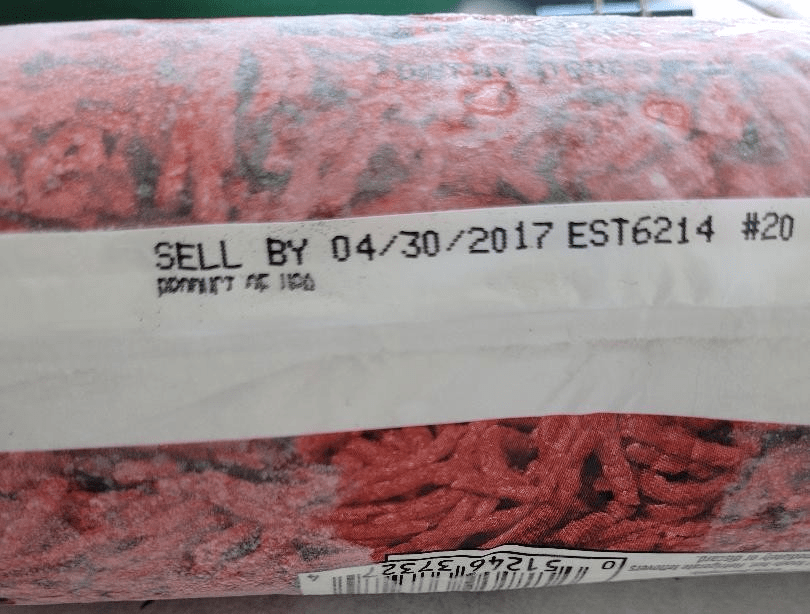
Beef. Its whats for dinner. Eight years ago, anyway.

Todays dinner staple comes from Trumps first term, when I was still in college, and had somewhat less grey hair than now. What a difference eight years makes, hm?

Since I’m upright and typing, rather than in a hospital somewhere getting my stomach pumped, it is evident that eating eight year old ground beef didnt hurt me. Why would it? If you store this stuff properly…which means freezing it and keeping it at around zero degrees…it will last indefinitely. The record around here for fossilized freezer findings has been 11 years on some short ribs. And they were yummy.

Most household freezers that are part of  your refrigerator do not keep things as cold as a dedicated freezer. Go to CostCo, pick up a chest freezer for a couple hundred bucks, stick it in your garage or basement, and start buying in bulk.

Inevitably some budding genius in the comments will go off about how this is a bad idea because power outages occur and blah, blah, blah. And, you know what?….power outages do occur. Which is why we prepare for them (hence the term preparedness). In my case, that looks like a generator and enough fuel to get me through most non-EOTWAWKI power failures in my region. And if it comes to the point where all the fuel is exhausted and the power still hasnt come back? Well, its time for a big barbecue and a whole bunch of pressure canning. And until that happens…..have a deep freeze.

Seven years in the deep freeze

Time for another round of “Will It DIgest”.

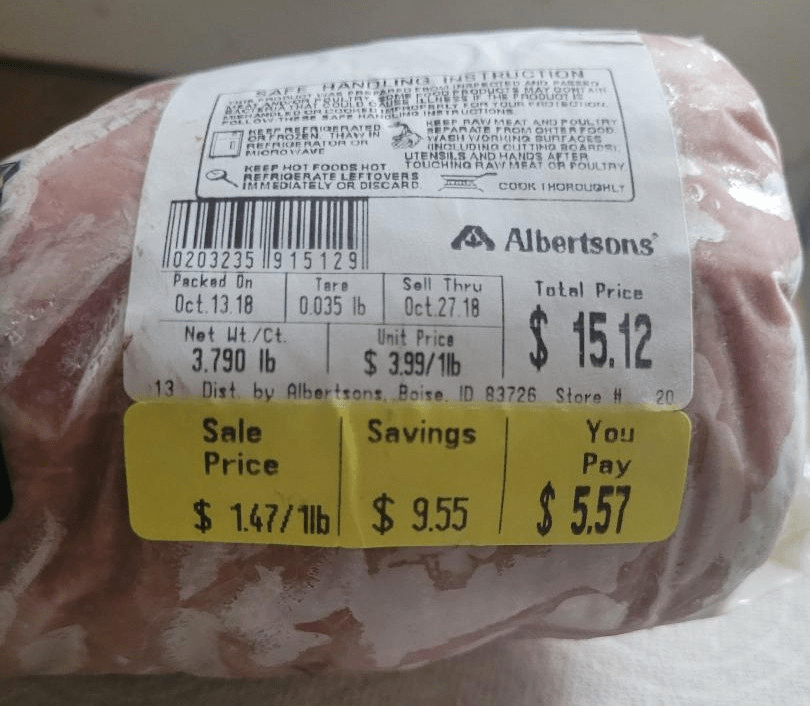
Todays contestant is a couple pork tenderloins that went Shackleton back in 2018. Stuffed in the deep freeze for the last seven years, its time to being it back to life and see how it went.

Is anyone terribly surprised that the results are savagely anti-climactic? No weird smells, no weird textures, no alarming gastric consequences. And this isn’t surprising. Packaged properly, which means wrapped tightly in plastic to exclude as much air as possible, and kept around 0-degrees, frozen meat will keep pretty indefinitely. I think the record around here is 11 years.

The really fascinating thing about these archaeological digs is noting how the prices of meat have changed over the years. I remember when I sometimes got 85/15 ground beef for a buck and ahalf a pound when it was on sale. Nowadays its around $5-6 a pound. Thus, when you see a sale….jump on it. Also, this is why a freezer and a vacuum sealer are must-have items.

Guns? Sure. But food…ah, thats another story

Re-organizing my stuff, especially the long-term food, has me musing about the classic have vs. have-not conflict that we will see when the wheels fly off society…and that, to some degree, we are seeing now.

The apocalypse is going to come in several different flavors…civil war/disturbance, economic depression, huge natural disaster, pandemic, stray nukes…and it will, no doubt, at some point require that you be ready to maintain the safety and security of your loved ones and your home. But you know what happens far more often than the need to point a gun at someone? The need to eat.

I’m an old-school survivalist – being armed is right up there at the top of the list of things to be ready for. But I also have dang near thirtyfive years of being that old school survivalist behind me. In all that time, I have needed to eat far more times than I’ve needed to point a gun at someone. Not saying it wont happen…simply saying that, statistically, youll be more likely to be patting yourself on the back over your food stash than your gun and ammo stash.

In addition to keeping you from, y’know, dying, food has an excellent moral and motivational (Motivatory? Motivary?) effect – as the graphic on the MRE entree says: food is a force multiplier. Well-fed people are going to perform better than starving people. And starving people are desperate people who do desperate things..and doing desperate things is a great way to become someone who doesn’t need food at all…forever. So dont be a starving person who takes crazy risks out of desperation, and don’t be around starving people who are unpredictable and dangerous.

Having that resource of food also makes you a target. Truly desperate people…people who are cold, who are hungry, who are hopeless, who are watching their loved ones miss meals…are dangerous and unpredictable. Don’t be one of them and don’t let them know you’re there.

Right now we live in a world where people will literally kill you because they want your sneakers, think you cut them off in traffic, or simply want your cellphone. And thats in a world with 911, electricity, cops, and a somewhat-functioning society. Now imagine what it’ll be like when the only mechanism to keep the foot on the brake pedal of social chaos is whatever you’ve got in your holster or slung over your shoulder.

In a situation like that the person who can sit at home, safe and secure, and not have to venture out into the chaos looking for food and supplies has a tremendous advantage. Exponentially so if he’s there with his equally well-fed and well-armed family and friends.

It used to be that people first getting into preparedness/survivalism started off with a wild binge of gun and ammo buying, and everything that came after was done with far less rigor and enthusiasm. I have encountered quite a few people who had guns and ammo aplenty but put virtually no thought into food. A bunch of 2-liter pop bottles filled with rice and beans is better than starving…I guess. But you really should aspire for better than that.

And for the love of Crom, stock up on ‘regular’ food….the canned fruits, the jarred sauces and soups, the bags of pasta and rice, etc, etc. Expensive freeze drieds are awesome but when I suffer a small-scale EOTWAWKI like a job loss or 48-hour power failure, I’m going to be really reluctant to break into the $30 can of Mountain House Chicken and Rice and more likely to grab a $2 jar of spaghetti sauce and a $3 bag of pasta off the shelf.

Guns and radios and fuel and all the other sexy stuff is important, no doubt, but water and food are always going to get more use and demand than pretty much anything else you can store. It’s absolutely worth thinking about what youre stocking up on, how much of it you’re putting away, and how youre going to use it. Certainly thats where my mind is these days.

Shelf-stable at CostCo

Was up at CostCo the other day and saw this:

This is simply tetra-packed UHT milk. And…you can find UHT milk in the cooler at pretty much any supermarket. So, really, this isn’t necessarily a real find.

I have a love-hate relationship with milk – I hate it and love drinking anything else. Also, there are some questions I have about drinking cow milk. First off, I’m a human, not a cow. Would it not make more sense for me to drink the milk of my own species, which is by its nature, specifically designed for my particular organic makeup? And even then, once humans get past a certain age, milk doesnt provide the same benefits than what it provides when the human is newly minted and still developing. In short, I’m not a cow…how is drinking cow milk a good idea?

However….nothing is better on a bowl of cornflakes. Problem is, if I open a quart of milk there is no way I wind up using it all up before it goes bad. So, for me, the small bottles of UHT milk that last about six months in the fridge, unopened, make more sense.

Anyway, if you hate running out of milk, this is a possible way around that…buy a case, stick it in the fridge (or on a shelf) and youre covered. But…you could also just stroll down to WinCo, find the smaller bottles of UHT milk, stuff ’em in the back of your fridge, and have the same result as this stuff at CostCo.

But, still, its nice to see at CostCo.

Canned roast beef from 2014

On todays episode of ‘Will It Digest’ – an 11-year-old can of Kirkland Beef.

Not gonna lie, I was actually thinking of just dropping these at an animal shelter or homeless shelter (surprisingly interchangeable) and replacing it with some more recent stuff. But…this is a good chance for a little empirical data gathering, don’t you think?

I should have taken the pic before I opened the can. Didn’t plan ahead.

As always, it smelled exactly the way canned meat always smells – like cat food. Its hideous. But even recently made stuff smells like that. It’s just the nature of canned meats. As usual, once you put the heat to the meat the smell is replaced with a more appetizing smell. Figured I’d do a Green Pepper Beef sorta rice bowl. If youre curious: 1tbsp of hosin sauce and oyster sauce, 2 tbsp garlic, 1/4 cup soy sauce, 1/2 cup chicken stock, pinch of sugar, some red pepper flakes, sliced up pepper, sliced up onion. And make up some rice while youre at it.’

How was it? Delicious. I guess I’ll have a more definitive answer in about eight hours, but it seems just fine. I’m not surprised, most canned food will last a bloody long time. As long as the cans retain their integrity, and are stored in the classic ‘cool dry place’, they’ll last for decades. There are some caveats to that of course….highly acidic foods (tomatoes, pineapples, etc) will not last near that long, regardless of how well you store the cans. But low-acid stuff (which is what meat is) will keep quite a while.

I was reminded how darn good that Kirkland roast beef is last night. It really is an unsung hero of the long-term pantry. And, as shown above, a handy item for making a quick and hearty meal.

While I’m on the subject, a good question would be “Have I ever actually had any problems with canned food?” Actually, yes. I learned the hard way a long time ago that canned tomato products were best used up within a couple years and not much longer than that.

I had a can of enchilada sauce that, when I opened the can, was filled with nothing but water. Also had several cans of roasted red peppers start bulging in a disturbing manner. Those last two were from non-USA sources. I try to stick exclusively to US made/packaged foods when possible. Maybe the canned corned beef from Argentina is tasty but I trust the US food environment far more than I do something in South America….Upton Sinclair not withstanding.

Travel food II

I made a post a few days ago about the ‘just in case’ dining solution I carry with me in my checked luggage in case I get stuck having to overnight in the airport when I travel. It’s primary features are that it takes up as minimum an amount of space as possible, assumes electricity is available (for the immersion heater), and assumes water is available (for reconstituting the freezedrieds and making hot drinks). These last two are not a tall order, even in an airport that is ‘closed’ for the night. I have spent nights camped out next to an electrical outlet watching movies on my phone, using the airports wifi, wrapped in my woobie, and dining on whatever snackage I packed in my bag.

But what about where water isn’t guaranteed, and neither is electricity? I actually have a somewhat similar setup but it’s a bit more space-intensive.

We’re all familiar with the usual one-liter Nalgene bottles, right? The cool thing about them is that there are a lot of accessories out there designed specifically for their shape and profile…carry pouches, special lids, etc, etc. It’s a lot like the AR…there may be a better choice, but the ubiquity of the item and its tremendous third-party support make it a sensible choice. I must have a half dozen of the Nalgene bottles sitting in my kitchen. Theyre just handy. But…did you know that they make a larger version in that same general design envelope? It’s exactly like your regular Nalgene bottle except slightly longer to accommodate 50% more liquid. Still take the same lids, will still fit most open-top pouches, but gives you an extra margin of liquid for those thirsty days and long trips.

The regular Nalgene is 32 oz. The supersized one is 48 oz. Since the only dimensional difference between the two is overall length and the diameter is the same between the two, cups that are designed to nest over the bottom of the 32oz Nalgene will fit exactly the same on the bottom of the 48oz Nalgene. Convenient. Same for the mouth of the two bottles. Lids, caps, etc, are completely interchangeable.

Although Maxpedition makes the bottle holder I am currently using, other companies make a similar product. The important thing is that they have various attachment points to allow you to carry the whole thing either on a carry strap, MOLLE’d to your gear, or by other means. It’s also really important that it have some type of storage on it for the essentials. With enough MOLLE coverage you can add whatever pouch you like to it to hold your accessories.

48 oz Nalgene bottle carrier on left, 32 oz ("normal size") on right. Larger carrier gives slightly more onboard storage space.

48 oz Nalgene bottle carrier on left, 32 oz (“normal size”) on right.

This is the setup I take with me when I go hunting, fishing, or anywhere I figure I’ll have some kind of al fresco dining experience. It’s strictly for field cooking, although, obviously, water is water. The purpose of this setup is to give me everything I need to crack open some Mountain House, instant oatmeal, ramen, or any other ‘just add hot water’ meal. This is what has worked for me so far, what works for you is up to you to discover. My setup:

  • Maxpedition bottle holder – Keeps everything in one place, has plenty of carry and attachment options, and has a useful-sized accessory pouch for everything below.
  • Nalgene 48 oz. bottle – I hate having to filter water. I carry a LifeStraw in my bag, but for my out-n-about cooking needs a full 48oz of water is usually plenty. A small Sawyer filter would work but any filter is going to either need to be carried separately due to space concerns on the bottle holder. Alternatively, with enough MOLLE you can add a small pouch dedicated to your filter. Maybe.
  • Screwtop drink lid – I have these on all my Nalgene bottles. Makes drinking on the move much easier. High recommend.
  • Esbit Stove – Smaller and more compact than a small butane stove w/ cartridge. Tradeoff is that it doesn’t boil water as quick. But…it does work.
  • Esbit fuel tabs – Hard to have too many of these. They do double duty as emergency firestarters. I keep a handful in my hunting bag.
  • Titanium spork – Any spork or plastic utensil will do. I went the Gucci route because I’m a major gear queer and I like nice things. Get a cheaper plastic one and you’ll be fine. Also threw in the CRKT food tool because I had it laying around.
  • Firestarter – Matches and lighters are my first go-to, but this will light an Esbit tab if you know what youre doing.
  • Matches – Far easier to light pretty much anything with good matches than the other methods. Again, can’t really have too many. Keep ’em dry. We’ve talked about this.
  • Cooking cup – Titanium again. Beacuse. There are plenty of cheaper alternatives out there, but just make sure that your Nalgene bottle will nest inside it.

This is the setup I use for fishing, hunting, or just being afield. A small musette bag filled with freezedrieds, repackaged ramen, instant soup, instant oatmeal, cofffe/hotchoc/tea, and a small water filter would, used in conjunction with the above mentioned kit, make a huge difference in a crisis and not take up much room. In fact, in the back of my truck is a tall .50 can that has a setup almost exactly like that. It’s compact, durable, pretty complete, and can keep me fed for a good bit of time if I’m just sitting in my truck waiting for the snow plow. Might have to dig it out and take some pictures. But this is the setup I use for the ‘running around’ occasions. However, it does have some utility for a small ‘run out the door’ emergency setup if you have a small satchel of freeze drieds to go with it.


Article – Yes, You Can Cook Tinned Fish in Its Tin

Interesting article that addresses one of the issues about ‘cooking in cans’:

“The current debate often centers on the presence of BPA (bisphenol A) in can linings,” Motta says “At José Gourmet, our tins are BPA-NIA (BPA-Not Intentionally Added), meaning no BPA is deliberately included in the products.” He added that the industry is moving towards 100-percent BPA-free linings in compliance with EU regulations.

My takeaway is that it’s probably not a great idea to cook tinned fish directly in the tin for every meal, but in terms of health impact, it’s similar to microwaving food in a plastic container — an at-your-own-risk kind of activity that falls squarely in line with the improvisational spirit of using whatever’s handy to get the job done. With a better grasp of the science behind cooking in cans, I’m ready to embrace it in spirit if not exactly practice, heating the tinned fish separately and then adding it back to the can to serve.

It used to be a thing that you could cook heat your canned food, say, some Chef Boyardee for example, by putting the can in boiling water. When the food was heated all the way through you could open the can and eat. No muss, no fuss.

The change in this practice started a while back when cans were starting to incorporate plastic liners in them to help keep the cans from rusting and avoid flavor issues from the contents of the can reacting with metal….you can see this most notably in high-acid foods like tomatoes and pineapple which will eventually react with the can in a way that leaves a black ‘mold’ in the can.

This article seems to suggest that if there is an issue with the cans used these days, the negative impact is as minimal as the risk you get from microwaving your food in a plastic container.

I suppose that in a crisis, two or three days of canned ravioli heated in boiling water will do you far less damage than not eating at all, but I think I’m still inclined to just have a quality mess kit and a way to clean it. I am curious, however, about retort pouches. Obviously MRE’s are designed from the ground up to be heated in boiling water. But what about things like pouches of tuna and chicken from the supermarket? Just as boilable as MRE’s? Or are we back to worrying about plastic liners becoming part of our GI tract?

On the other hand, most foods that are canned are already cooked and simply need to be re-heated to be tasty. That doesn’t mean they can’t be eaten cold…just means they won’t be as enjoyable. And ‘not enjoyable’ beats starvation any day of the week.